AI in the workplace has rapidly evolved from a futuristic concept into a practical tool that is transforming how organisations operate. Artificial intelligence in the workplace is being used to streamline business processes, improve efficiency, and enable better decision making. From automating repetitive tasks like data entry to deploying advanced ai systems for predictive maintenance, workplace ai has become a cornerstone of modern business.
The adoption of ai technology is not limited to large corporations. Small and medium-sized businesses are also using ai tools to save time, cut costs, and improve customer experience. Generative ai platforms are making human like conversation possible, while intelligent ai systems are reducing human error in areas such as finance, compliance, and supply chain management.
However, implementing AI solutions in the workplace also raises important questions about ethical considerations, potential job displacement, and privacy concerns. This guide explores the benefits, real world examples, challenges, and implementation strategies of ai adoption, providing a clear roadmap for business leaders seeking measurable business outcomes.
What Is AI in the Workplace?
Artificial intelligence in the workplace refers to the use of ai systems, machine learning, and generative ai to support business practices. Unlike traditional ai, which was rule-based and limited to specific tasks, modern workplace ai is adaptive, capable of learning from training data and delivering accurate responses in real time.
Different terms are often used: some people call it ai workplace or ai at work, while others speak about ai for work or ai in workplace. Regardless of the phrasing, the idea is the same: integrating intelligent systems into everyday tasks to achieve better outcomes.
Examples of ai in the workplace include:
- Automating routine tasks such as invoice processing, payroll, and document processing.
- Customer support through ai powered chatbots and virtual assistants that resolve customer queries instantly.
- Supply chain optimisation, where predictive analytics and ai systems forecast demand and manage logistics.
- Human resources, with ai tools analysing employee behaviour, supporting development programs, and reducing human bias in recruitment.
- Marketing and sales, where ai technology provides actionable insights, supports lead generation, and enables better decision making.
At its best, ai in the workplace complements human expertise. It reduces human error, automates repetitive tasks, and allows employees to focus on creativity, problem solving, and strategic planning. Workplace ai is not about replacing human intelligence but enhancing it.
Benefits of AI in the Workplace
Improved Efficiency and Cost Savings
One of the strongest arguments for ai in the workplace is its ability to improve efficiency. AI tools handle repetitive tasks like document processing, payroll, and invoice checks at a speed no human can match. Organisations using ai systems for these processes report significant cost savings.
For example, in finance departments, ai technology reduces errors in expense claims and delivers faster approvals. These improvements free up human employees to work on business strategy instead of paperwork. In operations, ai tools can optimise delivery routes and predict supply chain bottlenecks, reducing wasted time and resources.
Reduced Human Error and Stronger Risk Management
Human error is unavoidable in manual work. AI systems dramatically reduce mistakes by applying consistent logic and machine learning algorithms. For instance, ai tools in compliance can scan thousands of documents for errors that human employees might miss.
This reduces risks, improves accuracy, and strengthens risk management frameworks. Businesses in heavily regulated sectors like finance and healthcare rely on ai technology for exactly this reason.
Better Decision Making with Data Analysis
AI in the workplace provides decision makers with data driven insights. Machine learning algorithms can analyse vast amounts of data quickly, producing actionable insights. Natural language processing enables sentiment analysis of customer feedback, helping companies make informed decisions on product development and customer service improvements.
By providing real-time data analysis, ai systems support better decision making and improved efficiency across departments.
Enhanced Customer Experience
Customer experience has become a critical competitive factor. AI tools such as virtual assistants and ai powered chatbots handle routine customer queries around the clock, providing accurate responses and human like conversation.
Generative ai enhances personalisation by tailoring recommendations and responses to individual customers. A travel company, for instance, can use ai technology to suggest personalised holiday packages based on past bookings and customer preferences. This improves satisfaction and loyalty while reducing pressure on human resources teams.
Employee Morale and Engagement
Workplace ai can significantly improve employee morale. By automating routine tasks, employees are allowed to focus on meaningful work. Development programs that provide new skills in ai expertise and machine learning encourage continuous learning.
This reduces fears of job displacement and helps employees feel more secure in their roles. Improved morale translates into higher productivity and stronger business outcomes.
Revenue Growth and Long-Term Success
The combination of cost savings, efficiency gains, and enhanced customer experience drives revenue growth. Businesses that successfully implement ai in the workplace achieve measurable improvements in profitability.
For example, manufacturers that adopt predictive maintenance avoid costly downtime, boosting revenue while improving safety. Retailers using personalised ai powered tools see increased sales from targeted recommendations. These outcomes demonstrate that ai adoption is not just about efficiency but about building a long-term competitive advantage.
Real World Examples of AI in the Workplace
Automating Data Entry and Document Processing
Data entry and document processing are ideal tasks for ai tools. Robotic process automation handles these repetitive tasks with speed and accuracy. A large logistics company, for example, can process thousands of supplier invoices using ai systems, achieving significant cost savings and improved efficiency.
Education providers are also starting to use ai technology to automate administrative processes such as student enrolment and grading. By reducing manual paperwork, schools and universities save staff time and improve accuracy in record keeping.
Customer Support with AI Powered Tools
Generative ai has revolutionised customer support. AI powered chatbots and virtual assistants use natural language processing to provide human like conversation and accurate responses. These ai tools reduce waiting times, improve customer experience, and boost employee morale by removing repetitive tasks from human employees.
In government services, ai technology is used to answer common citizen queries, reducing pressure on call centres. In healthcare, virtual assistants handle appointment scheduling, ensuring patients receive faster responses without overloading administrative staff.
Supply Chain Optimisation and Predictive Maintenance
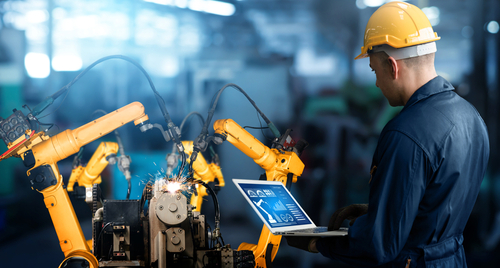
In supply chain management, ai technology is transforming operations. Machine learning models forecast demand, optimise inventory, and manage logistics more effectively than traditional methods. Predictive maintenance tools identify equipment issues before breakdowns occur, reducing downtime and supporting revenue growth.
Retailers use ai systems to forecast stock requirements across multiple locations, avoiding overstocking in some areas while preventing shortages in others. Airlines and transport companies use predictive maintenance to keep vehicles safe and operational, reducing disruption for customers.
Human Resources and Development Programs
AI in human resources is reshaping how companies hire, train, and support staff. Ai systems scan CVs, assess employee behaviour, and recommend personalised training data. This supports development programs and continuous learning, aligning workforce skills with business objectives.
Terms such as artificial intelligence in HR, ai in human resources, and even hr and ai reflect how deeply workplace ai is being integrated into people management. Development programs powered by ai tools identify future leaders and support succession planning.
AI in Marketing and Sales
Marketing teams use ai tools to analyse customer behaviour, optimise campaigns, and support lead generation. Predictive analytics and sentiment analysis tools provide actionable insights that inform marketing strategies. Sales teams benefit from ai systems that track customer interactions and recommend next steps, improving decision making and customer experience.
In e-commerce, ai technology powers recommendation engines that suggest products customers are more likely to buy, boosting sales. B2B companies use ai systems to identify high-value prospects and focus their lead generation strategies where they matter most.
AI in Healthcare, IT, and Legal Services
In healthcare, ai technology supports diagnostics, patient scheduling, and compliance with privacy standards. Legal firms use ai tools to automate document processing, case research, and contract analysis.
AI in IT is also becoming more common, with ai systems monitoring networks, improving cybersecurity, and detecting anomalies that could signal a data breach. This shows how ai in it is no longer experimental but a vital part of digital infrastructure.
Challenges and Ethical Considerations
While ai in the workplace offers many advantages, challenges must be addressed.
- Potential Job Displacement: Nearly half of business leaders expect job displacement due to automation. However, most roles are evolving rather than disappearing. Employees need new skills to complement ai systems.
- Privacy Concerns: AI relies on data collection and training data, raising privacy concerns. Strong data security measures are required to protect sensitive information.
- Ethical Considerations: Bias in ai models can produce unfair outcomes. Ethical principles and ai governance must guide ai adoption to ensure fairness and accountability.
- The Human Element: AI technology should complement human expertise, not replace it. Human intervention remains essential for complex processes and sensitive decisions.
How to Implement AI in the Workplace
1. Assess Business Readiness
Before starting an ai project, companies should evaluate their ai readiness. This involves reviewing existing systems, identifying opportunities for ai adoption, and setting clear business objectives.
2. Start with Pilot Projects
Pilot projects provide a safe way to test ai technology. For example, automating routine customer queries with a chatbot or streamlining invoice processing with robotic process automation. Real world examples demonstrate value before scaling.
3. Invest in Training and Development Programs
Employees must be prepared for ai adoption. Development programs that focus on ai expertise, machine learning, and natural language processing encourage continuous learning. This reduces fears of job displacement and supports employee morale.
4. Integrate AI with Existing Systems
AI tools work best when integrated with existing systems. Integration ensures smooth workflows, improved efficiency, and better decision making.
5. Monitor and Adapt
AI adoption is an ongoing process. Organisations should track cost savings, improved efficiency, reduced human error, and customer experience. Adjustments should be made to ensure ai systems continue to deliver business outcomes.
The Future of AI at Work
The future of ai in the workplace will be shaped by several trends:
- Generative AI: Generative ai tools will play a larger role in knowledge management, customer queries, and content creation.
- AI Agents: Intelligent ai agents will take on complex processes, reducing the need for constant human intervention.
- Sustainability AI: Companies will use ai technology to monitor energy use and meet sustainability goals.
- Edge AI: Edge ai will enable real-time decision making closer to data sources.
- AI Governance: Ethical considerations will require frameworks for fairness and accountability.
- Human + AI Collaboration: Human creativity and ai systems will work together, ensuring the human element remains central.
Learning and development functions will also evolve, with ai in learning and development becoming common. AI tools will personalise training pathways, supporting continuous learning and ensuring employees develop the new skills needed for future success.
Conclusion
AI in the workplace is now essential for business success. By implementing ai technology, organisations can automate routine tasks, reduce human error, improve efficiency, and enhance customer experience.
Real world examples across finance, supply chain, healthcare, IT, HR, and customer service demonstrate the value of ai adoption. While challenges such as potential job displacement, privacy concerns, and ethical considerations remain, these can be addressed with strong governance and continuous learning.
For business leaders, the opportunity is clear: invest in ai systems, embrace development programs for employees, and integrate ai tools into business practices. Done well, workplace ai enhances human expertise, supports employee morale, and delivers long-term business outcomes.
Frequently Asked Questions (FAQs)
Q: What is AI in the workplace?
A: AI in the workplace means using ai systems, ai tools, and ai technology to automate tasks, improve efficiency, and support decision making. It is sometimes referred to as ai workplace, ai at work, or ai for work.
Q: How can companies adopt AI successfully?
A: Start with pilot projects, invest in employee training, integrate ai technology with existing systems, and monitor performance. This approach ensures successful ai adoption.
Q: What are the main benefits?
A: Benefits include cost savings, improved efficiency, reduced human error, enhanced customer experience, and stronger business outcomes.
Q: What are the risks?
A: Risks include potential job displacement, privacy concerns, and bias in ai systems. Ethical considerations and governance frameworks are needed.
Q: Will AI replace human employees?
A: AI will automate repetitive tasks, but human expertise in creativity, problem solving, and empathy will remain vital. This reflects the balance between human intelligence and workplace ai.
Q: How does AI improve customer experience?
A: AI tools such as chatbots and virtual assistants provide accurate responses, faster support, and personalised service, enhancing customer experience.
Q: What role will generative AI play?
A: Generative ai will support content creation, customer queries, and knowledge management while complementing human creativity.
Q: How do you measure success with AI?
A: Success is measured by cost savings, improved efficiency, better decision making, and enhanced employee morale. Business objectives should always guide measurement.
Q: How does AI impact human resources?
A: AI in human resources — also called artificial intelligence in HR or ai and hr — supports recruitment, performance management, and learning and development. It reduces repetitive tasks and enables better decision making.
Q: What is the future of AI in HR and learning?
A: Future applications include ai in learning and development, personalised training programs, and ai in the workforce tools that enhance both employee morale and long-term business outcomes.
Q: How do you measure success with AI?
A: Success is measured by cost savings, improved efficiency, better decision making, and enhanced employee morale.
Q: How does AI impact employee morale?
A: By automating repetitive tasks, ai in the workplace allows employees to focus on meaningful work, supported by new skills and continuous learning.
Q: Where is AI adoption headed next?
A: Future trends include sustainability ai, edge ai, intelligent ai agents, and stronger ai governance frameworks, all of which will redefine how organisations use workplace ai.